3-Day Intensive Course for Developers and Data Professionals
3 Intense Days
7 Hours per Day (Split into two 3.5-hour sessions)
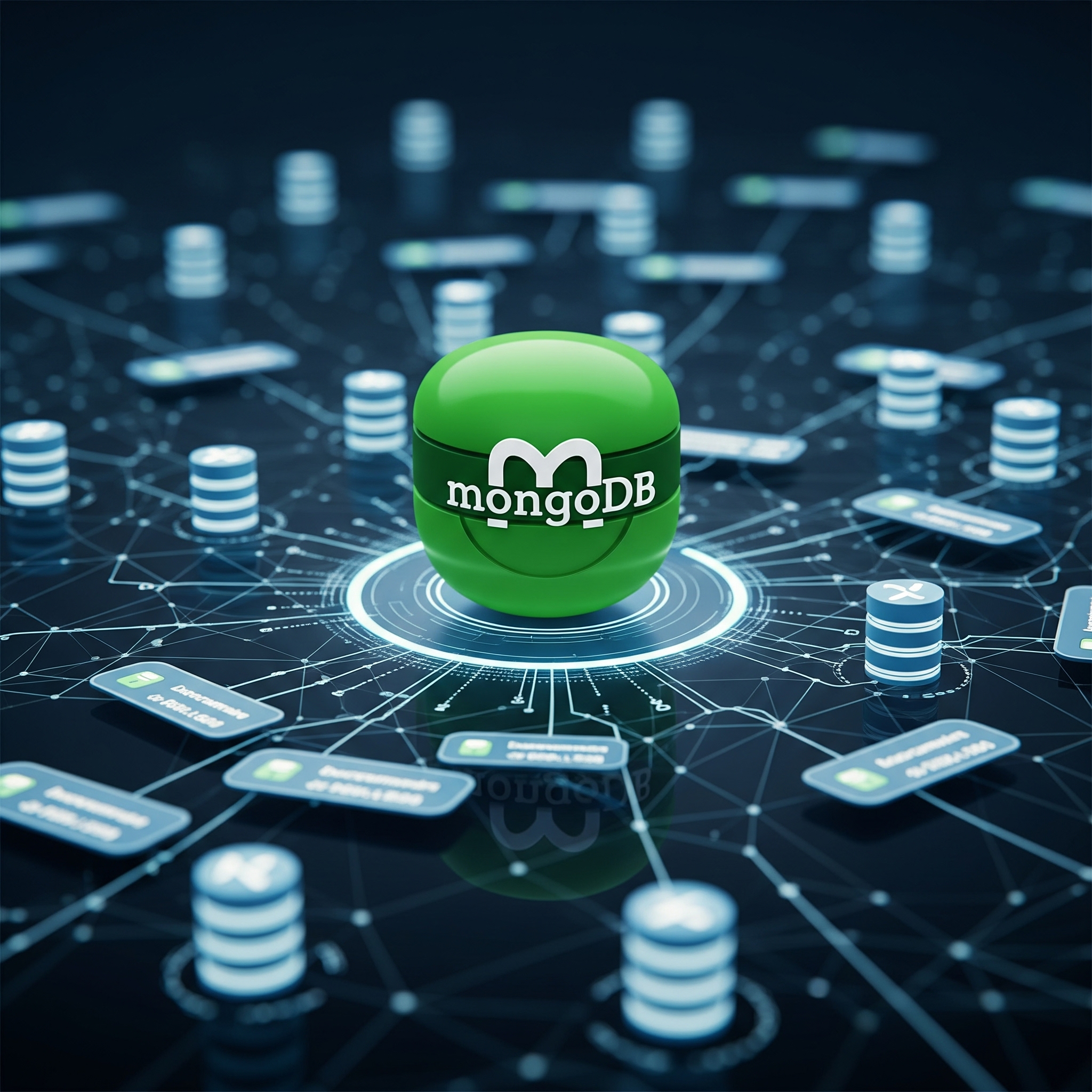
Learning Path Visual
Your practical path from document storage to scalable NoSQL solutions:
Day 1: MongoDB Fundamentals & CRUD Operations
Learn the basics of MongoDB, its architecture, and how to interact with collections. Perform CRUD operations and understand data modeling principles for documents.
Day 2: Aggregation, Indexing & Schema Design
Use MongoDB’s aggregation pipeline to analyze data efficiently. Learn indexing strategies and how to design flexible yet performant schemas for real-world apps.
Day 3: Performance, Security & Deployment
Explore performance tuning, authentication, backups, and horizontal scaling. Learn to deploy and manage MongoDB clusters in production environments (on-prem or cloud).
Course Overview
MongoDB is the most popular NoSQL document database — built for performance, scalability, and flexibility. This hands-on course teaches developers and data professionals how to use MongoDB effectively, from building queries to deploying secure, production-ready databases.
Whether you’re building microservices, IoT apps, or analytics dashboards, this course gives you the skills to design schemas, manipulate data, and scale MongoDB with confidence.
You’ll learn how to:
-
Install and configure MongoDB (locally and in the cloud)
-
Design documents and collections for real-world business needs
-
Perform CRUD operations using the Mongo shell and drivers
-
Use the aggregation pipeline for reporting and data transformation
-
Apply indexes to optimize performance
-
Implement user roles, authentication, and access controls
-
Deploy and scale MongoDB with replica sets and sharding
-
Monitor performance and automate backups
This course bridges data engineering, backend development, and NoSQL best practices, making it ideal for modern application environments.
What’s Inside Each Day
Day 1 — MongoDB Fundamentals & CRUD Operations
-
MongoDB architecture: documents, collections, databases
-
Mongo Shell basics and Compass GUI
-
Creating, reading, updating, and deleting documents (CRUD)
-
Querying with operators ($gt, $in, $and, $regex)
-
Data types and document structure best practices
-
Hands-on: Build and populate a sample product catalog database
Tools: MongoDB Shell, MongoDB Compass, Node.js Driver (optional)
Focus: Foundation • Queries • Document Modeling
Day 2 — Aggregation, Indexing & Schema Design
-
Aggregation framework: $match, $group, $project, $sort
-
Data transformation pipelines and nested document handling
-
Schema design for different use cases: analytics, e-commerce, social apps
-
Index types: single field, compound, text, geo, TTL
-
Explain plans and performance diagnostics
-
Hands-on: Create an analytics pipeline and apply indexing strategies
Tools: MongoDB Shell, Compass Aggregation Builder
Focus: Reporting • Performance • Design Patterns
Day 3 — Performance, Security & Deployment
-
Replica sets and failover strategies
-
Introduction to sharding and horizontal scaling
-
Backup and restore with mongodump, mongorestore
-
User roles, RBAC, password policies, IP whitelisting
-
Monitoring with MongoDB Atlas or Ops Manager
-
Hands-on: Deploy a replica set and set up access controls
Tools: MongoDB Atlas, mongosh, MongoDB CLI, cloud VM or Docker
Focus: Scalability • Security • Production Readiness
Course Goals
By the end of this course, you’ll be able to:
-
Build and manage MongoDB-powered applications
-
Model data efficiently in flexible schemas
-
Use the aggregation framework for real-world reporting
-
Optimize performance using indexes and profiling
-
Deploy MongoDB in scalable, secure environments
-
Support production workloads with backup and monitoring tools
Who Should Take This Course?
-
Backend developers working with NoSQL databases
-
Data engineers building ingestion pipelines and reporting layers
-
Sysadmins and DevOps teams managing database infrastructure
-
Analysts and BI professionals exploring MongoDB for fast reporting
-
Students and learners transitioning from SQL to NoSQL
Class Reference: SD-80
Form Updated on: 06/16/2025 (Version 1)
Last Modified on: 06/16/2025
Program Note
This course is continuously updated with MongoDB’s latest features, deployment patterns, and integrations with modern stacks (Node.js, Python, Atlas, Docker).
Use the links for more tutorial:
Tutorial point: https://www.tutorialspoint.com/mongodb/index.htm
W3school: https://www.w3schools.com/python/python_mongodb_getstarted.asp
MongoDB: https://docs.mongodb.com/