
AI, data & software instructor
Meriam Mbindyo
Instructor for AI, data, DevOps, Agile and software modules, with experience across Paris-based IT and business schools.
Artificial intelligenceMachine learningData miningBTS EnglishESPDevOps
Professional training module
From Raw Data to Real Results. This 3-day technical workshop teaches you how to uncover meaningful patterns in data using proven mining techniques. You’ll move from foundational concepts to production-ready workflows with tools like Scikit-learn, MLflow, and Streamlit — and learn how to turn mined insights into real business impact.
Overview
From Raw Data to Real Results. This 3-day technical workshop teaches you how to uncover meaningful patterns in data using proven mining techniques. You’ll move from foundational concepts to production-ready workflows with tools like Scikit-learn, MLflow, and Streamlit — and learn how to turn mined insights into real business impact.
Learning outcomes
Perform data preprocessing and transformation for mining
Apply classification, clustering, and association rule mining
Detect anomalies and outliers with statistical and ML methods
Build interpretable and reliable models
Connect mining results to dashboards, APIs, and decision processes
Address ethics, bias, and data quality in production
Module content
3 Intense Days
7 Hours per Day (Split into two 3.5-hour sessions)
Your hands-on journey from raw data to reliable, actionable patterns:
Day 1: Foundations of Data Mining: Concepts, Methods & Toolkits
Understand core algorithms, workflows, and use cases of data mining. Set up your environment with tools like Python, Jupyter, and Scikit-learn. Learn preprocessing, sampling, and exploratory analysis essentials.
Day 2: Patterns in Practice: Clustering, Classification & Anomaly Detection
Apply key mining techniques including k-means, decision trees, and DBSCAN. Build supervised and unsupervised models, detect outliers, and evaluate performance using metrics and visualizations.
Day 3: Real-World Deployment: Pipelines, Projects & Interpretability
Go beyond modeling to deploy full workflows. Connect mining outputs to dashboards, APIs, and business outcomes. Implement explainability, fairness checks, and scalable deployment patterns.
Raw data holds hidden patterns — this course teaches you how to find and apply them. Through hands-on projects and real datasets, you’ll master the full lifecycle of data mining: from preparation and modeling to deployment and interpretation.
You’ll move beyond theory to build real, usable mining workflows using Python, open-source libraries, and cloud-ready tools.
Perform data preprocessing and transformation for mining
Apply classification, clustering, and association rule mining
Detect anomalies and outliers with statistical and ML methods
Build interpretable and reliable models
Connect mining results to dashboards, APIs, and decision processes
Address ethics, bias, and data quality in production
Designed for engineers, data scientists, and developers, this course gives you the practical skills to mine value from complexity.
Understand the data mining lifecycle (CRISP-DM, SEMMA)
Learn preprocessing techniques: missing values, encoding, normalization
Explore sampling and feature selection strategies
Set up your toolkit: Python, Pandas, Scikit-learn, Seaborn
Visualize data distributions, correlations, and outliers
Apply basic unsupervised techniques (k-means preview, PCA)
Tools: Python, Pandas, Scikit-learn, Jupyter, Seaborn, NumPy
Focus: Preprocessing • Foundations • Tool Setup
Train classification models: decision trees, k-NN, logistic regression
Apply clustering: k-means, DBSCAN, hierarchical clustering
Perform association rule mining (Apriori, FP-Growth)
Detect anomalies using Isolation Forest, Z-score, and LOF
Use confusion matrix, ROC-AUC, and silhouette score for evaluation
Visualize decision boundaries, clusters, and anomaly regions
Tools: Scikit-learn, Matplotlib, Yellowbrick, MLxtend
Focus: Models • Metrics • Pattern Discovery
Build reusable pipelines with sklearn.pipeline and MLflow
Automate training and tuning workflows
Connect models to dashboards and APIs (Flask, Streamlit)
Apply SHAP and LIME for model explainability
Conduct bias, fairness, and data drift checks
Export, document, and present mining outputs for stakeholders
Tools: MLflow, Streamlit, Flask, SHAP, LIME, Scikit-learn
Focus: Deployment • Interpretability • Business Integration
By the end of this course, you’ll be able to:
Design and execute full-scale data mining workflows
Apply key classification, clustering, and detection methods
Evaluate model performance with clarity and depth
Package and deploy interpretable mining models
Communicate insights effectively to technical and business audiences
Address ethical and operational concerns around data use
Data scientists looking to deepen pattern detection and model deployment
Engineers and developers who want to build and deploy mining models
Analysts and researchers working with large structured datasets
ML engineers seeking a mining-centric workflow foundation
Academic professionals teaching or studying knowledge discovery
CTOs and tech leads who want to integrate mining into products or platforms
Class Reference: TID/030
Form Updated on: 06/16/2025 (Version 1)
Last Modified on: 06/16/2025
This course is updated continuously to reflect the latest methods and open-source frameworks in practical data mining and pattern discovery.
Data Mining: Definitions, 5 Free Tools, and Techniques
What is Data Mining? Definition of Data Mining, Data Mining Meaning
How Data Mining Works: A Guide | Tableau
TOP-10 DATA MINING CASE STUDIES | International Journal of Information Technology & Decision Making
Download Data Mining Case Studies I
What are some data mining case studies that use simple data mining algorithms?
The Age Of Analytics And The Importance Of Data Quality
The Importance of Data Collection: 10 Reasons Why Data Is So Important
The Benefits of Data Mining in CRM
Why Retailers Should Care About Data Mining : Intelligent Enterprise
Data Analysis with R (Coming Soon!) – BDU
Big Data Use Cases – Big Data Analytics News
What Is Data Science, and What Does a Data Scientist Do?
What is association rules (in data mining)? – Definition from WhatIs.com
18 Big Data tools you need to know!! – Data Science Central
Unit Testing in R – DZone Big Data
How Pokemon Go needed a Kubernetes powered Java cloud
A Pocket Guide to Data Science
Data Science and the Imposter Syndrome
Scalable Software and Big Data Architecture – Software Architectural Patterns and Design Patterns
The Ultimate Guide to Basic Data Cleaning
All the Best Big Data Tools and How to Use Them – Import.io
Navigating the Complexity of Big Data Transformation
4 Steps to Moving Big Data to the Cloud
Introductory Data Concepts: Fantastic Video Tutorials from Ronald van Loon
Big Data Storymap Revisited | Grroups
5 Steps to Building a Big Data Business Strategy – Data Science Central
Key tools of Big Data for Transformation: Review & Case Study – Data Science Central
TID-030/ Data Mining Workshop (R or Python) est présenté ici en version synthétique française afin que les équipes pédagogiques puissent évaluer rapidement l'intérêt du module.
Le module s'inscrit dans la famille Analytics et intelligence artificielle. Il peut être adapté au calendrier de l'école, au niveau Tous niveaux, au volume horaire 3 jours et aux modalités d'évaluation prévues.
Ce module vise à relier les outils data, IA et automatisation à des usages professionnels concrets.
LC peut ajuster le déroulé, la langue d'enseignement, les supports, les exercices et les critères d'évaluation selon la promotion, le diplôme, le niveau d'autonomie attendu et les contraintes de planning.
Pour une version détaillée du syllabus en français, LC confirme le programme final après cadrage du niveau, des heures, du calendrier et des livrables attendus.
Academic delivery team
After reviewing the module content, LC confirms the right delivery profile by topic, level, teaching language and assessment expectations.
AI, data & software instructor
Instructor for AI, data, DevOps, Agile and software modules, with experience across Paris-based IT and business schools.

Digital strategy, AI & technical communication instructor
Instructor for English-medium web, AI, technical communication and employability modules in higher-education technical programmes.
Continue exploring

Analytics & artificial intelligence
€75 per hourTurn Disruption Into Opportunity. This 3-day Digital Transformation course shows you how to rethink business models, align strategy with technology, and lead organizational change…
Analytics & artificial intelligence
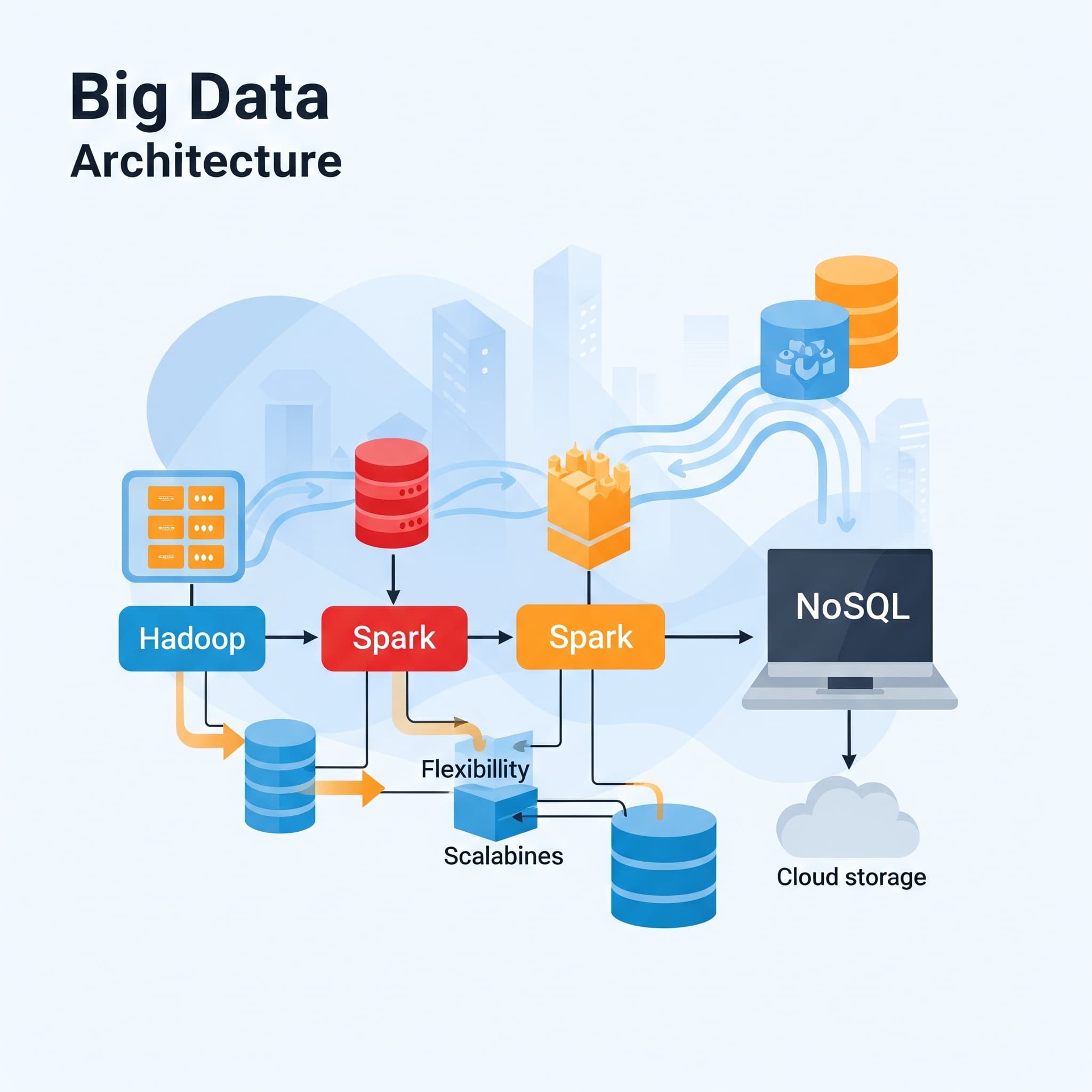
€75 per hourBuild Smarter Infrastructure. Deliver Real Value. This 3-day intensive workshop teaches you how to design scalable data platforms and monetize them through APIs, services, and mar…

IT & project management
€75 per hourWant to land a job in tech? Start with the cloud. Cloud computing powers nearly every digital service today. In this practical, beginner-friendly course, you’ll gain the skills to…